How do you stay compliant with pesticide record keeping laws in the United States?
A plain overview of what records commercial applicators are generally expected to keep and how to keep them well.
Commercial applicators are generally expected to record each application: product and EPA number, rate and amount, target site, date, and the certified applicator involved. Federal rules cover restricted-use pesticides, while states often require more and set retention periods. Keep records organized, retained for the required years, and ready to produce.
Know that records are required
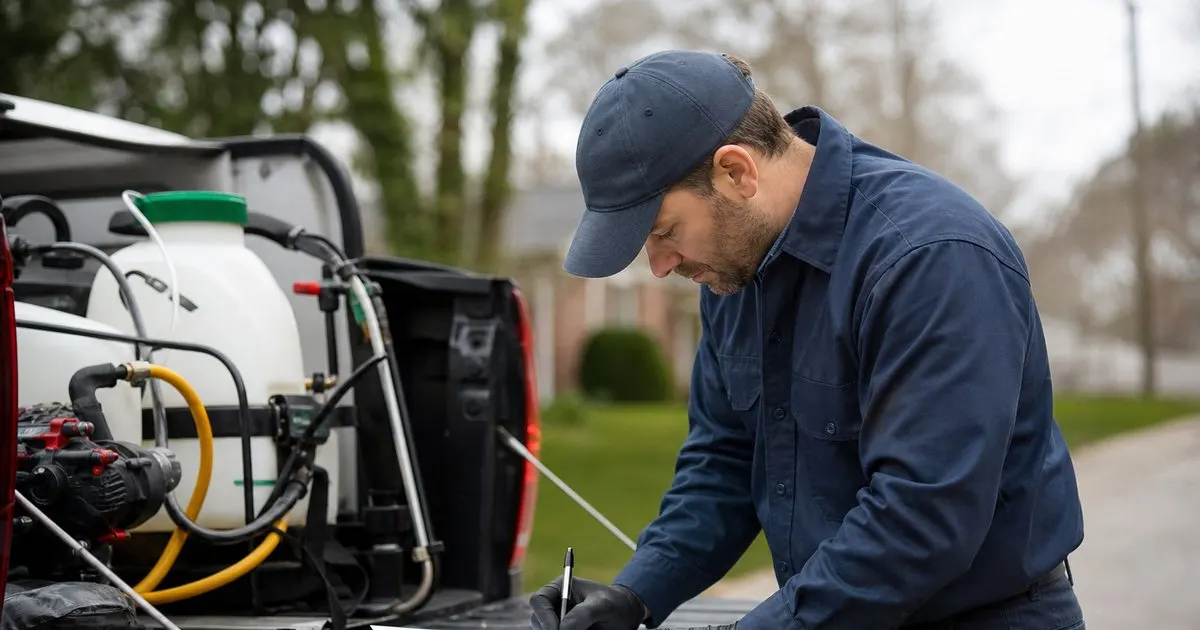
Commercial pesticide applicators in the United States are generally required to keep records of the pesticides they apply. Requirements come from federal rules and, more specifically, from each state's lead agency, which often adds its own details and retention periods. The exact rules vary by state, so your first step is to read your own state's requirements rather than assume. Related: Why does a pest control company lose customers in the first year of service?
This article is a general orientation, not legal advice. Treat it as a prompt to confirm the specifics with your state agency, because the penalties for missing records fall on the license holder, not on a blog.
Keep reading: How do you plan the most efficient pest control route for a busy day?, What is the best way to log chemical applications at every service stop?, Why does keeping a treatment history per property matter for pest control?. See how PestPatrolr helps you pest control route scheduling and treatment logging.
Capture the standard details
Across jurisdictions, the commonly expected fields are similar: the product name and its EPA registration number, the amount applied, the target pest, the date and location of the application, and the certified applicator responsible. Recording these consistently for every job puts you in line with most requirements. Related: What is the best way to log chemical applications at every service stop?
The safest habit is to capture more than the minimum. If you always log product, registration, rate, target, location, date, and applicator, you are covered whether the specific rule that applies asks for four fields or seven.
Keep records for the required period
Records are only compliant if you retain them for the required time, which is often a period of years and is set by your state. A record you made and then lost after a few months does not satisfy the requirement. Retention is as much a part of compliance as the original entry.
Digital storage makes retention far easier than a filing cabinet. Paper fades, floods, and gets thrown out, while a digital record persists and stays searchable for as many years as the rule demands. Related: When should a small pest control operator switch from paper logs to digital records?
Be ready to produce them
The point of the record is that you can produce it on request, whether for a routine audit, an inspection, or a complaint investigation. Records scattered across route sheets and glove boxes are technically kept but practically useless when an inspector is standing in your office.
PestPatrolr captures the product, EPA registration, rate, target pest, date, and location on every application and stores it in a searchable, exportable history, so meeting a records request is a quick export rather than a frantic search. Confirm your state's exact fields and retention period to be sure your setup matches. Related: Why does keeping a treatment history per property matter for pest control?
- Commercial applicators must keep pesticide application records.
- Check your own state agency for the exact rules.
- Log product, registration, rate, target, date, and applicator.
- Store records digitally and retain them for the required years.

Julien Jimenez
Julien Jimenez is an independent software builder based in Paris. He designs, ships, and operates focused SaaS products for small businesses and independent professionals. Read the full author page.
Frequently asked questions
How long must pesticide records be kept?
Federal rules for restricted-use pesticides set a minimum retention period, and many states require longer. Check your state lead agency, since the required timeframe and the exact fields differ by state.
Do records differ for restricted-use versus general-use products?
Restricted-use pesticides carry stricter federal recordkeeping requirements. General-use products may have lighter federal rules, but many states require full records for both, so follow the stricter of the two.
Route Every Tech, Log Every Treatment
Pest control route scheduling and treatment logging. PestPatrolr is built to help you put this into practice.
Start free trialMore from the PestPatrolr blog

How do you plan the most efficient pest control route for a busy day?

What is the best way to log chemical applications at every service stop?
Why does keeping a treatment history per property matter for pest control?
Get the PestPatrolr playbook
Practical guides on pest control software, straight to your inbox as we publish them. No spam, unsubscribe any time.