Why does a pest control company lose customers in the first year of service?
Most cancellations happen early, and they rarely happen because the bugs came back. The real reasons are quieter and easier to fix.
The customer never understood what they bought
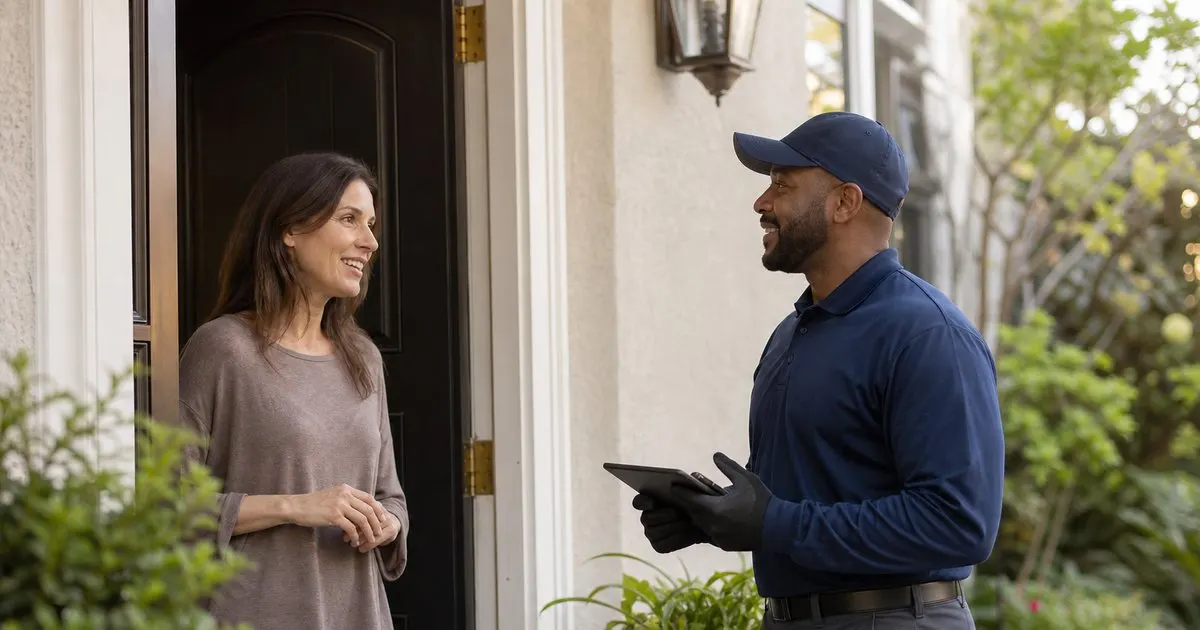
A surprising share of first-year cancellations trace back to the sales conversation. The customer heard "we take care of your bugs" and pictured zero insects, ever. The company meant a quarterly exterior barrier with interior service on request. When a spider shows up in the bathtub in month four, the customer feels cheated and the technician feels unfairly blamed. Nobody lied. The expectations were simply never lined up. Related: How do you plan the most efficient pest control route for a busy day?
Fix it at the start. Every new recurring customer should get, in writing, a plain-language description of what the plan covers, what it does not, how often someone will come, what happens between visits if they see activity, and what a covered callback looks like. Read it to them on the first visit. It takes three minutes and it is the cheapest retention tool a route company has. Related: When should you schedule recurring pest control visits for the best results?
Keep reading: How do you plan the most efficient pest control route for a busy day?, What is the best way to log chemical applications at every service stop?, Why does keeping a treatment history per property matter for pest control?. See how PestPatrolr helps you pest control route scheduling and treatment logging.
Visits that feel invisible
Exterior-only quarterly service is efficient, but from the customer's perspective it can look like nothing happened. The truck was in the driveway for twelve minutes, nobody knocked, and the invoice arrived a week later. After three of those, the customer starts asking what exactly they are paying for. The service may have been perfect. The problem is that perfect and invisible feel the same as absent. Related: How much should a pest control operator charge for a quarterly service plan?
Make every visit leave evidence. A door hanger or a text message sent from the driveway, with the technician's name, what was treated, what was found, and one specific observation about that property, changes the experience entirely. "Treated the foundation and eaves, found and removed two paper wasp nests under the back deck rail, no rodent activity at the stations" reads like someone was paying attention. Because someone was.
The first callback was handled badly
Almost every recurring customer will call at least once in the first year saying they saw something. How that call goes is the retention moment. If the person answering the phone sounds annoyed, quotes a callback window five days out, or debates whether the pest is covered, the customer starts shopping. If the response is "I am sorry to hear that, let me look at your history, we can have someone out Thursday morning at no charge," the customer feels taken care of and usually stays for years. Related: Why does keeping a treatment history per property matter for pest control?
That response requires two things: a policy that makes covered callbacks genuinely free and fast, and instant access to the treatment history so the person on the phone can see what was done and when. A technician arriving at a callback who already knows the last three visits, the products applied, and where activity was found can walk in and go straight to the problem. That competence is visible to the customer and it builds the kind of trust that survives the next sighting.
Billing surprises and silent price changes
The other big first-year killer is money, and usually not the price itself. It is the surprise. A card charged on an unexpected date, a rate increase that appeared on an invoice without a heads-up, an add-on service that the technician recommended and the customer thought was included. Each one erodes trust a little, and cancellation calls that start with "I got this bill and..." are hard to save.
Bill on a predictable schedule and say so up front. Announce any price change at least one full billing cycle ahead, with a reason. When a technician recommends an additional service on site, have them quote it as a separate line item and get a yes before doing the work. None of this is complicated. It is just discipline, and the companies that keep customers past year one tend to be the ones that never let the customer feel ambushed.
- Put the plan's coverage, visit frequency, and callback policy in writing and review it on the first visit.
- Leave visible evidence of every visit, with one property-specific observation.
- Treat the first callback as the retention moment and make it fast, free, and informed by history.
- Bill predictably and announce price changes a full cycle in advance.

Julien Jimenez
Julien Jimenez is an independent software builder based in Paris. He designs, ships, and operates focused SaaS products for small businesses and independent professionals. Read the full author page.
Route Every Tech, Log Every Treatment
Pest control route scheduling and treatment logging. PestPatrolr is built to help you put this into practice.
Start free trialMore from the PestPatrolr blog
How do you plan the most efficient pest control route for a busy day?
What is the best way to log chemical applications at every service stop?
Why does keeping a treatment history per property matter for pest control?
Get the PestPatrolr playbook
Practical guides on pest control software, straight to your inbox as we publish them. No spam, unsubscribe any time.