What is the best way to onboard a new pest control technician in thirty days?
A new tech who is thrown on a route alone in week one will cost you callbacks and customers. A structured first month pays for itself.
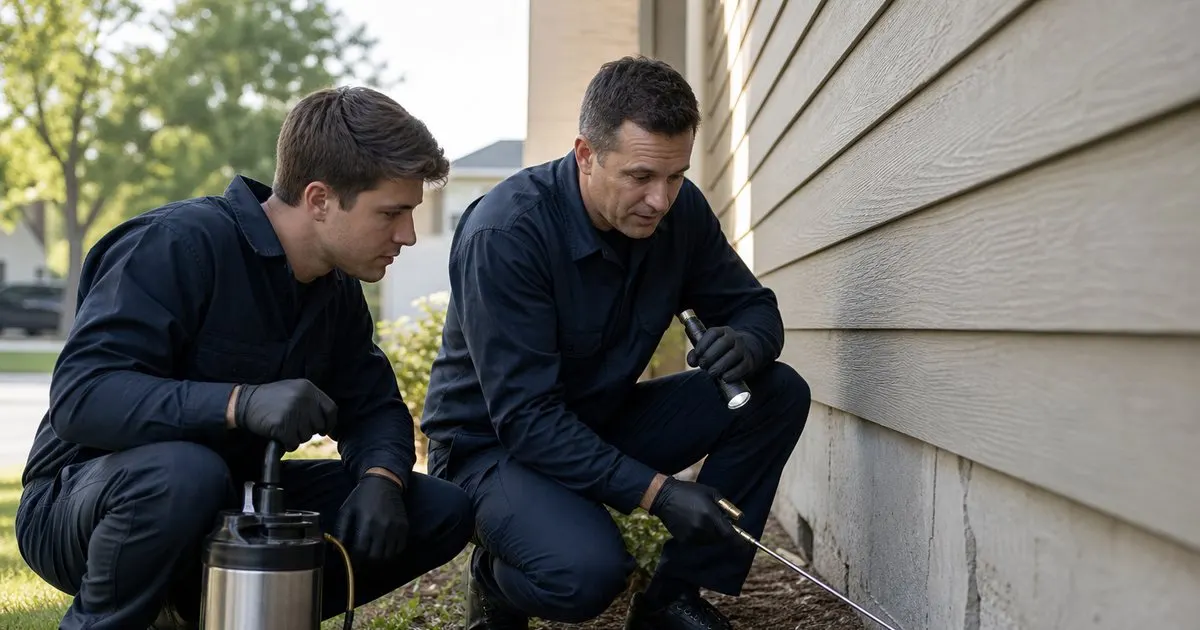
Week one: licensing, labels, and riding along
The first week is not about productivity. In most states a new hire cannot legally apply restricted products unsupervised until they hold the appropriate license or registration, and the timeline for that varies widely, so week one is study time paired with ride-alongs. Have the new tech shadow your most patient technician, not your fastest one. The goal is for them to see fifteen or twenty real stops, hear how a seasoned tech talks to customers, and start recognizing the difference between a routine exterior service and a stop that needs a full inspection. Related: How do you plan the most efficient pest control route for a busy day?
Use the evenings for labels. Pick the eight or ten products your company actually uses and have the trainee read every label front to back, then quiz them on target pests, application sites, rates, and reentry or ventilation requirements. This sounds tedious. It is also the single most effective way to prevent the misapplication that gets small companies fined and sued. A tech who knows the labels cold makes better decisions on the spot than one who is guessing from memory.
Keep reading: How do you plan the most efficient pest control route for a busy day?, What is the best way to log chemical applications at every service stop?, Why does keeping a treatment history per property matter for pest control?. See how PestPatrolr helps you pest control route scheduling and treatment logging.
Week two: hands on the equipment, still supervised
In the second week the trainee should be doing the physical work while the trainer watches: mixing, calibrating a backpack sprayer, placing bait stations, dusting voids, setting and checking rodent equipment. Have the trainer stand back and let the trainee make small, recoverable mistakes. A bait station placed two feet from where it should go is a teaching moment. A trainer who does everything themselves produces a tech who has watched a lot and done very little.
This is also the week to introduce documentation as part of the job, not an afterthought. Every stop the trainee works, they also write up: target pest, product, amount, location, conditions, and recommendations. Review those write-ups at the end of each day. Sloppy notes in week two turn into sloppy notes for years if nobody corrects them early. If you use route software, this is when the trainee should get their own login and start logging in it. Related: What is the best way to log chemical applications at every service stop?
Week three: solo stops on an easy route with a safety net
Around week three, assuming licensing allows it, give the trainee a short route of low-complexity stops: exterior-only quarterly services for long-standing, friendly customers. Keep the day light, perhaps half the stops a veteran would run, and make sure the trainer is reachable by phone and ideally working a route nearby. Call the customers on that route ahead of time. Most are happy to know a new tech is coming and appreciate the heads-up.
After each solo day, do a fifteen minute debrief. What took longer than expected? Which customer asked a question the trainee could not answer? What did they see that they were unsure how to treat? Those answers become the training agenda for the next day. Resist the urge to fill the route to a full day just because the trainee did fine on Tuesday. Confidence built over a week holds. Confidence built in a day collapses at the first difficult stop. Related: How do you fit same-day emergency pest calls into an already full route?
Week four: full route, first review, and the callback test
By the fourth week the trainee should be carrying a near-normal route with a mix of stop types. The measure of whether onboarding worked is not speed. It is callbacks. Track every customer the trainee serviced in weeks three and four and watch for reinfestation calls over the following month. A new tech with a callback rate noticeably higher than the team's is missing something specific, and the treatment logs will usually show what: skipped inspection steps, wrong product for the target, or thin coverage. Related: What should a pest control technician do when a customer reports a reinfestation?
Sit down at the end of the month with the trainee, the trainer, and the logs. Go through a handful of stops in detail and compare what was written to what the property needed. Then set expectations for months two and three: which additional pests or services they will be trained on, when they will take on commercial accounts, and how their route will grow. People stay at companies where the path forward is clear. Thirty days of structured onboarding is the beginning of that path, not the end of it.
- Spend week one on ride-alongs and product labels, not on production.
- Let the trainee do the physical work under supervision in week two, and review their write-ups daily.
- Start solo stops on an easy, half-length route with a trainer reachable nearby.
- Judge the first month by callback rate on the trainee's stops, not by how fast they finished.

Julien Jimenez
Julien Jimenez is an independent software builder based in Paris. He designs, ships, and operates focused SaaS products for small businesses and independent professionals. Read the full author page.
Route Every Tech, Log Every Treatment
Pest control route scheduling and treatment logging. PestPatrolr is built to help you put this into practice.
Start free trialMore from the PestPatrolr blog
How do you plan the most efficient pest control route for a busy day?
What is the best way to log chemical applications at every service stop?
Why does keeping a treatment history per property matter for pest control?
Get the PestPatrolr playbook
Practical guides on pest control software, straight to your inbox as we publish them. No spam, unsubscribe any time.