How do you fit same-day emergency pest calls into an already full route?
Emergency calls are where route businesses make or lose their reputation. Here is how to slot them in without blowing up the rest of the day.
Decide in advance what counts as an emergency
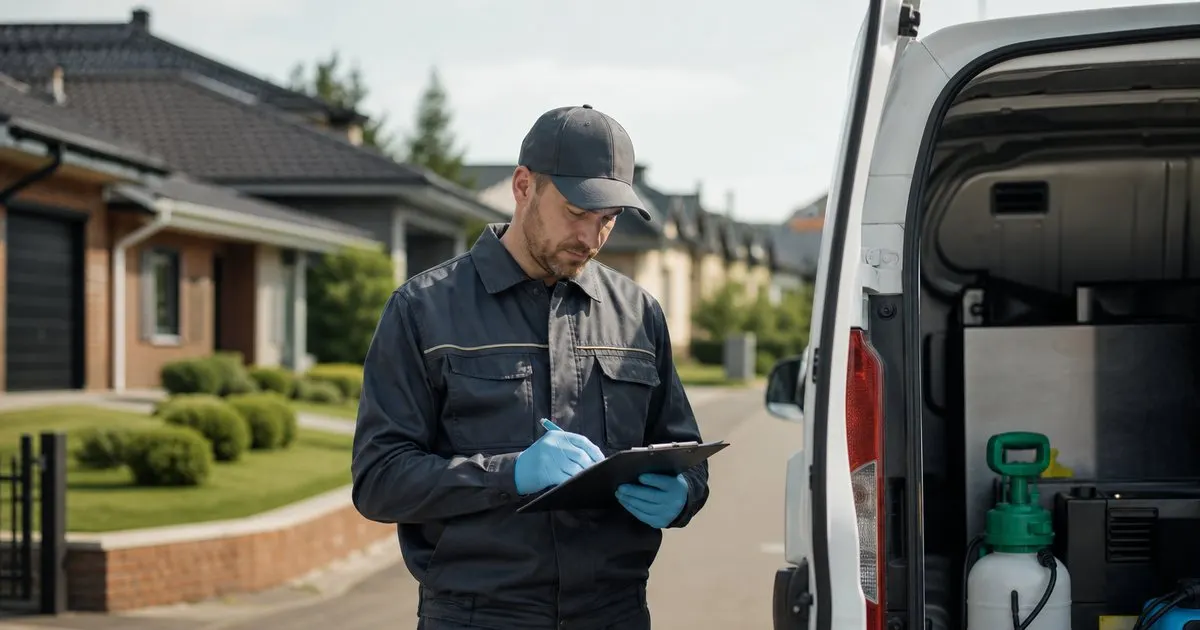
Not every urgent-sounding call is an emergency. A wasp nest over the front door of a home with a toddler is. A few ants on the kitchen counter, described in a panicked voice, usually is not. The mistake most small operators make is deciding this in the moment, on the phone, while a technician is standing in a customer's yard waiting for instructions. Write the definition down before the season starts. Stinging insects near entrances, rodents in a food service kitchen with an inspection pending, bed bugs in a rental unit with a tenant threatening to leave, and any pest that creates a health or safety risk for kids, the elderly, or animals typically go on the true emergency list. Related: How do you plan the most efficient pest control route for a busy day?
Everything else gets a "next available" slot, which you should be able to quote on the first call. Customers accept "tomorrow between one and three" far more easily than a vague "we will try to get someone out." The point of the written definition is not to turn people away. It is to protect the customers already on the route, who scheduled in good faith, from being bumped every time a new caller sounds upset. Related: Why does a pest control company lose customers in the first year of service?
Keep reading: How do you plan the most efficient pest control route for a busy day?, What is the best way to log chemical applications at every service stop?, Why does keeping a treatment history per property matter for pest control?. See how PestPatrolr helps you pest control route scheduling and treatment logging.
Build slack into the route before you need it
A route with zero open time has no way to absorb a surprise. Most experienced operators leave a buffer somewhere in the day, often a thirty to sixty minute gap in the early afternoon, that is either filled by an emergency or used to catch up on paperwork, restock, and callbacks. If nothing comes in, the technician finishes early, which is not a loss. If something does come in, the route has a place to put it that does not require calling four existing customers to reschedule. Related: What is the best way to onboard a new pest control technician in thirty days?
Where the buffer goes matters. Put it in the middle of the densest cluster of stops so a diversion is short, not at the end of the day when the tech is already an hour from the shop. If you run more than one technician, stagger buffers so at any given hour at least one route has room. A dispatcher or owner who can see every route on one screen can pick the closest available tech instead of guessing.
Triage the diversion by distance, not by who called first
When the emergency is real, the question is which technician takes it. The instinct is to send whoever is least busy, but the right answer is almost always whoever is closest, as long as they have the right products and equipment on the truck. A fifteen minute detour absorbed into a buffer costs the day very little. A forty-five minute cross-town drive can push three later stops into the evening and produce three unhappy customers instead of one happy one.
Check the truck inventory before committing. A tech routed to a yellowjacket nest without an aerosol or dust product labeled for stinging insects will make the drive twice, and a tech sent to a rodent emergency with no snap traps or bait stations on board is in the same position. Software that tracks what each vehicle is carrying makes this a five second check. Without it, a quick phone call to the tech before the dispatch decision saves a wasted trip. It also helps to keep a small emergency kit on every truck, restocked weekly, with the handful of products and tools that cover the calls on your written emergency list.
Communicate the ripple to everyone it touches
An emergency inserted into a route almost always shifts at least one later appointment. Customers rarely mind a delay they hear about ahead of time. They mind a delay they discover by waiting. As soon as the emergency is confirmed, send a short message to each affected customer with a revised window. Keep it honest: "We had an urgent stinging insect call nearby and your arrival window has moved to 3:30 to 5:00." Most people respond with some version of "no problem."
Close the loop internally too. Log the emergency stop with the same detail as a scheduled visit, including products used, target pest, and any follow-up needed, because emergency calls have a high rate of becoming recurring customers if the first visit goes well. A stop that gets treated as a one-off and never written up properly is a missed opportunity and, in most states, a record keeping gap. Related: What is the best way to log chemical applications at every service stop?
- Write down what qualifies as an emergency before the season starts, and quote next-available windows for everything else.
- Leave a buffer in the middle of the densest cluster of stops so an emergency has a place to land.
- Dispatch by proximity and truck inventory, not by which technician seems least busy.
- Message every affected customer with a revised window as soon as the diversion is confirmed.

Julien Jimenez
Julien Jimenez is an independent software builder based in Paris. He designs, ships, and operates focused SaaS products for small businesses and independent professionals. Read the full author page.
Route Every Tech, Log Every Treatment
Pest control route scheduling and treatment logging. PestPatrolr is built to help you put this into practice.
Start free trialMore from the PestPatrolr blog
How do you plan the most efficient pest control route for a busy day?
What is the best way to log chemical applications at every service stop?
Why does keeping a treatment history per property matter for pest control?
Get the PestPatrolr playbook
Practical guides on pest control software, straight to your inbox as we publish them. No spam, unsubscribe any time.