Which pest control jobs should a small operator refer out instead of taking on?
Saying no to the wrong job protects your license, your schedule, and your reputation. Here is how to decide.
Jobs your license does not cover
Pest control licensing in the United States is category-based and set by each state. A general household pest license typically does not cover structural fumigation, and in many states it does not cover termite treatment, wood-destroying organism inspections for real estate transactions, or wildlife trapping either. Taking a job outside your category because "it is basically the same thing" is how small companies end up with a fine, a suspended license, and a customer whose problem is still there. Related: How do you plan the most efficient pest control route for a busy day?
Know your categories cold and know which nearby companies hold the ones you do not. Whole-structure fumigation for drywood termites, for example, requires specialized licensing, equipment, and training almost everywhere, and there is no shortcut. Building a referral relationship with a fumigator means the customer gets served, you stay on the right side of the regulator, and often the fumigator sends general pest work back your way.
Keep reading: How do you plan the most efficient pest control route for a busy day?, What is the best way to log chemical applications at every service stop?, Why does keeping a treatment history per property matter for pest control?. See how PestPatrolr helps you pest control route scheduling and treatment logging.
Jobs that will eat your route
Some work is legal for you but wrong for your schedule. A full bed bug remediation in a large multi-unit building, a heavy German cockroach cleanout in a restaurant that has been neglected for a year, or a rodent exclusion job that requires sealing forty entry points on a commercial roof can each consume a technician for days. If your business is built on running thirty quarterly stops a day, pulling a tech off the route for a week means thirty stops a day go unserviced and the callbacks start. Related: When should you schedule recurring pest control visits for the best results?
Before accepting a large job, count the technician-days honestly and look at what those days are already committed to. Sometimes the answer is to take it and hire temporary help. Sometimes it is to take it and schedule it across several partial days. And sometimes the honest answer is that a company set up for project work will do it better and faster, and your customer will thank you for the referral. Being the company that recommends the right specialist builds more trust than being the company that took the job and struggled.
Jobs where the equipment gap is real
Certain treatments need equipment that a route truck does not carry. Whole-room heat treatment for bed bugs needs generators, heaters, and fans plus the training to run them safely. Bird control on a large building needs lifts, netting hardware, and fall protection. Fogging or misting inside a large warehouse needs machines and respirators most residential techs have never used. Renting the gear once and improvising is a recipe for a poor result and a safety incident.
The test is simple: could your technician do this job to a professional standard on their second attempt, with the gear you actually own? If the answer is no, refer it. If you see the same type of request three or four times a season, that is a signal to invest in the equipment and training and add the service properly. Until then, a referral partner who does it every week will get a better outcome than you will on your first try. Related: What is the best way to log chemical applications at every service stop?
How to refer without losing the customer
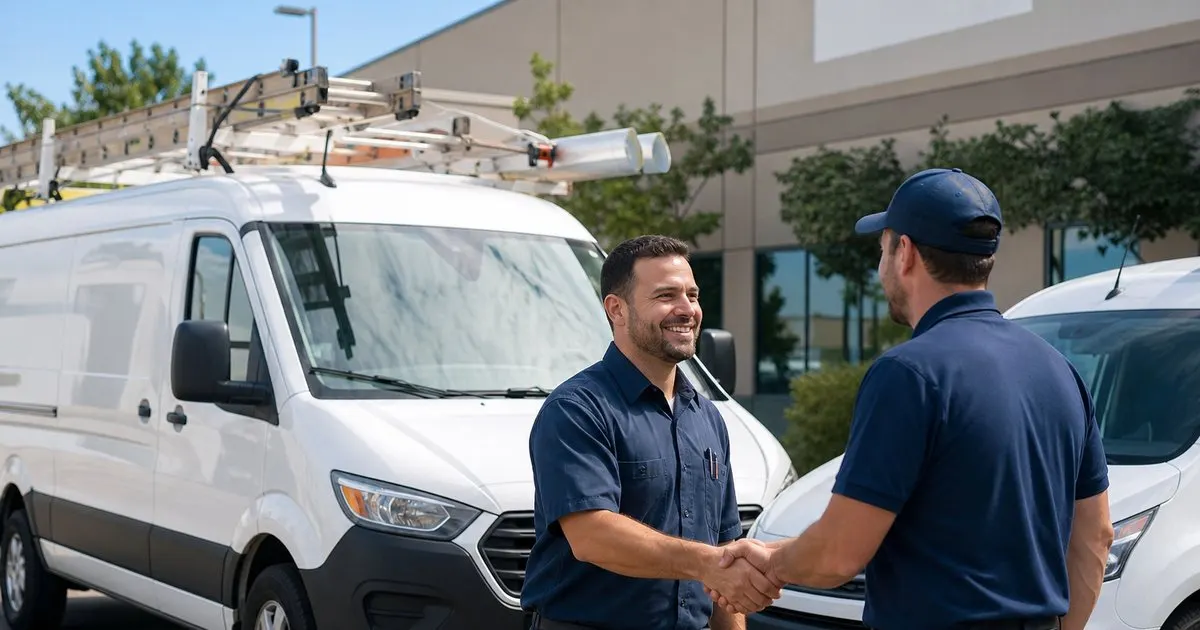
A referral is not a rejection. Handle it like a service. Explain what the job requires and why a specialist will do it better, give the customer a specific name and number, and offer to make the introduction yourself. Then follow up a week later to ask how it went. Customers remember the company that solved the problem, even when someone else did the work, and the follow-up call makes it clear you did not simply pass them off.
Track referrals the same way you track any account activity. Note in the customer's record who you referred them to and why, so that when they call back for general pest service, or when the specialist calls to confirm the work is complete, you know the history. Some operators formalize the arrangement with a referral fee in either direction. Others keep it informal and reciprocal. Either way, the referral network you build is a business asset, and a customer database that captures it is where that asset lives. Related: Why does keeping a treatment history per property matter for pest control?
- Never take a job outside your state license category, no matter how similar it looks.
- Count technician-days before accepting large project work and weigh them against route commitments.
- If the job needs equipment you do not own and could not run to standard on the second try, refer it.
- Handle referrals as a service with a named contact, an introduction, and a follow-up call.

Julien Jimenez
Julien Jimenez is an independent software builder based in Paris. He designs, ships, and operates focused SaaS products for small businesses and independent professionals. Read the full author page.
Route Every Tech, Log Every Treatment
Pest control route scheduling and treatment logging. PestPatrolr is built to help you put this into practice.
Start free trialMore from the PestPatrolr blog
How do you plan the most efficient pest control route for a busy day?
What is the best way to log chemical applications at every service stop?
Why does keeping a treatment history per property matter for pest control?
Get the PestPatrolr playbook
Practical guides on pest control software, straight to your inbox as we publish them. No spam, unsubscribe any time.