What is the best way to get customers to prep their home before a treatment?
Half of a failed interior treatment is a kitchen that was never emptied. Better prep instructions fix more callbacks than better products.
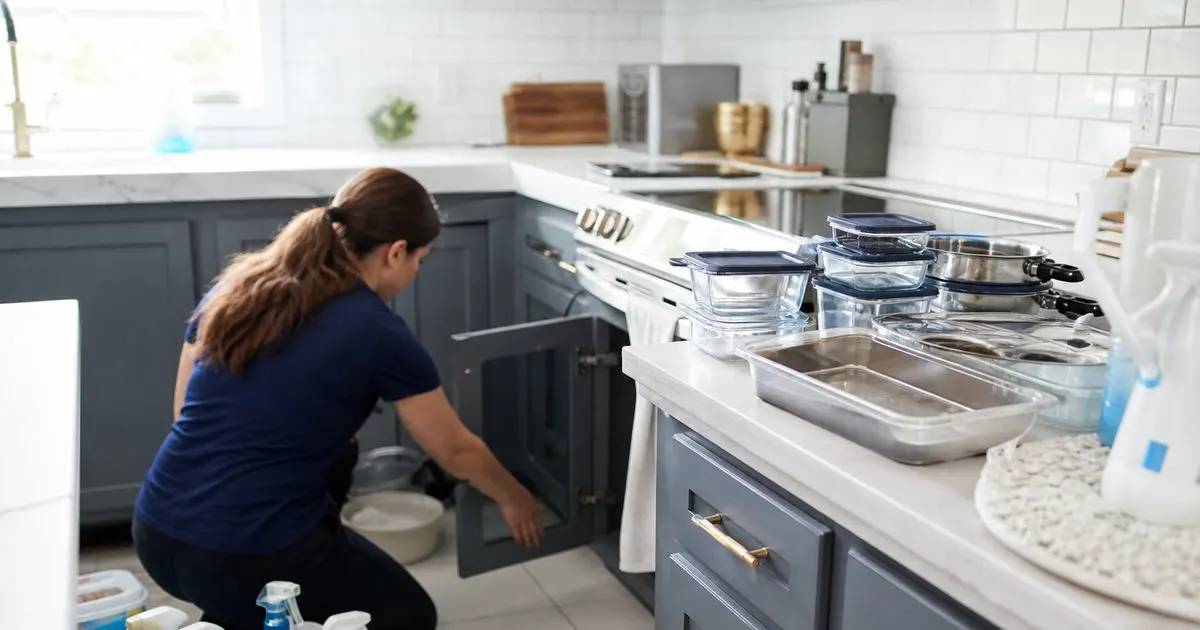
Why prep fails: the instructions, not the customer
When a technician arrives for a German cockroach cleanout and the cabinets are still full, the easy conclusion is that the customer did not care. Usually the truth is that the customer received a dense page of instructions three days ago, skimmed it, and did not understand which parts mattered. Prep instructions written by a technician for a technician are full of terms like "harborage" and "cracks and crevices" that mean nothing to a homeowner trying to figure out whether the toaster has to move.
Rewrite every prep sheet in plain language, organized by room, with the three or four things that actually matter for that treatment at the top in bold. "Empty the cabinets under the sink and next to the stove. Put the food in boxes in the living room. Move the refrigerator out from the wall if you can." A customer can act on that. A list of twenty items with no priorities gets a shrug. Keep separate sheets for cockroaches, bed bugs, fleas, and general interior service, because the prep is genuinely different for each. Related: What is the best way to log chemical applications at every service stop?
Keep reading: How do you plan the most efficient pest control route for a busy day?, What is the best way to log chemical applications at every service stop?, Why does keeping a treatment history per property matter for pest control?. See how PestPatrolr helps you pest control route scheduling and treatment logging.
Deliver it three times, in three ways
One message is not enough. Send the prep instructions when the appointment is booked, again two days before, and a short reminder the morning of. Use whatever channel the customer actually reads; for most residential customers that is text message, with the full sheet as a link or an attachment and the top three items in the text itself. Email works for some, and a printed copy left at the previous visit works for recurring accounts where the interior treatment is scheduled ahead. Related: Which pests require the most frequent recurring treatments in residential homes?
The two-day-before message is the one that matters most, because it is close enough to act on and far enough to fit around work and family schedules. Make it a question rather than a command: "Your cockroach treatment is Thursday at 10. Will you be able to empty the kitchen cabinets before then? Reply YES or call us if you need to reschedule." A reply of yes is a small commitment that customers tend to keep. A non-reply is a signal to call.
Confirm on arrival and decide what to do when prep is incomplete
The technician should walk the prep before starting. If the kitchen is emptied and the bedroom is not, that is a conversation at the door, not a surprise discovered halfway through. Give the technician a clear policy for partial prep: what they can treat anyway with reduced effectiveness, what they must skip, and when to reschedule instead of doing a treatment that will not work. Treating around full cabinets for a heavy roach infestation and calling it done is how the company ends up eating a free callback in three weeks.
Whatever the technician decides, document it. "Kitchen fully prepped, master bedroom closet not emptied, treated accessible areas, customer advised that closet will need treatment at follow-up." That note protects the company when the customer calls to say the treatment did not work, and it tells the next technician exactly where to start. A prep compliance field in the treatment log, even a simple full, partial, or none, turns this into data you can look at across the whole customer base. Related: What should a pest control technician do when a customer reports a reinfestation?
Make prep easier and the compliance rate goes up
Some customers cannot do the prep, because of age, mobility, a work schedule that does not allow a day off, or simply the scale of the task in a cluttered home. Offering a prep service, either in-house for a fee or through a referral to a cleaning company, converts those customers from partial treatments to complete ones. Even a modest step, like the technician bringing a few collapsible boxes for cabinet contents, removes a real barrier for a lot of people. Related: How do you plan the most efficient pest control route for a busy day?
Also look at whether your treatment method demands more prep than it needs to. Gel baits and targeted crack and crevice work for cockroaches require far less clearing out than broadcast applications, and many operators have reduced prep requirements substantially by changing approach. The less you ask, the more you get, and a treatment that works with realistic prep beats a theoretically superior one the customer never made possible. Track prep compliance against callback rates for a few months and the case for simplifying will usually make itself.
- Rewrite prep sheets in plain language by room, with the three items that matter most at the top.
- Send instructions at booking, two days before, and the morning of, and ask for a reply.
- Give technicians a written policy for partial prep and log compliance at every interior visit.
- Offer a prep service or simplify the treatment method to raise the compliance rate.

Julien Jimenez
Julien Jimenez is an independent software builder based in Paris. He designs, ships, and operates focused SaaS products for small businesses and independent professionals. Read the full author page.
Route Every Tech, Log Every Treatment
Pest control route scheduling and treatment logging. PestPatrolr is built to help you put this into practice.
Start free trialMore from the PestPatrolr blog
How do you plan the most efficient pest control route for a busy day?
What is the best way to log chemical applications at every service stop?
Why does keeping a treatment history per property matter for pest control?
Get the PestPatrolr playbook
Practical guides on pest control software, straight to your inbox as we publish them. No spam, unsubscribe any time.